< Perspectives
5 reasons why 2026 should be the year you evaluate your oesophageal stent choice

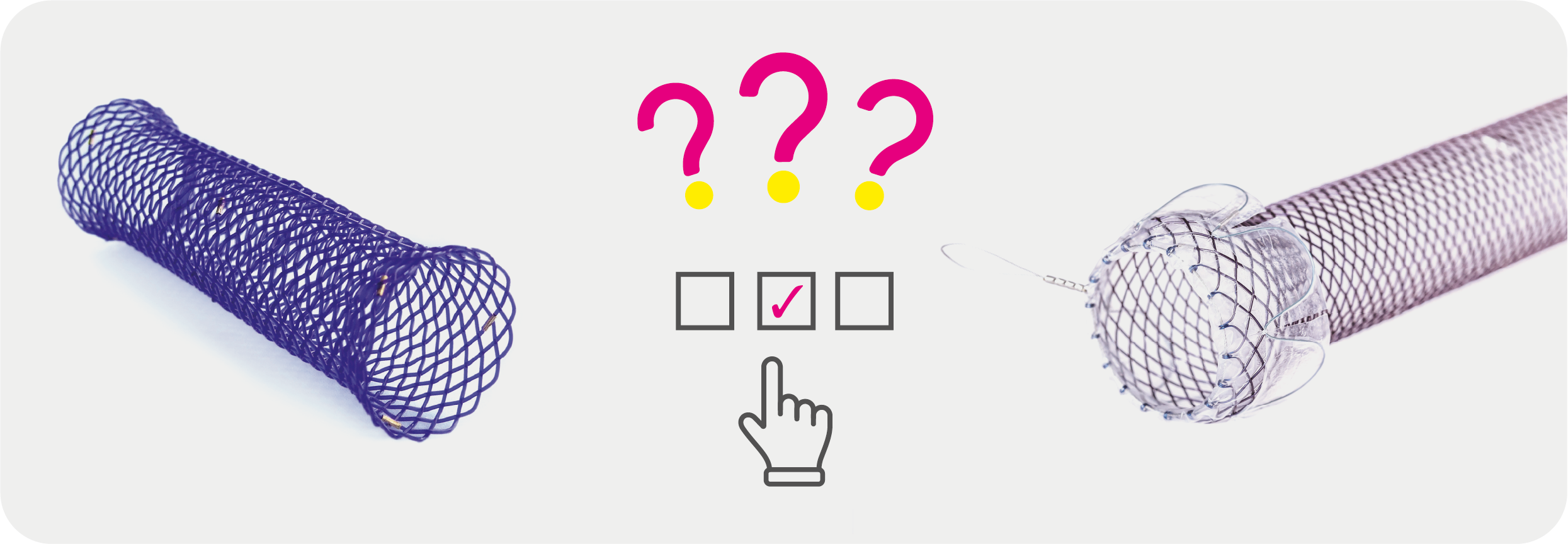
When was the last time you evaluated which stent was best for your patients and your service?
It can often feel like there aren’t enough hours in the work day, and making time to get to know the different stents on the market is easy to dismiss. But what if your current stent is actually costing you and your patients without you realising? Stent choice can have a huge impact on the patient pathway and future interventions – here are our top 5 reasons why 2026 should be the year you evaluate if your current stent is what’s actually best for your service:

- Patient cohorts have changed dramatically over the past 20 years
Compare patient cohorts for palliative stenting now to 20 years ago and you’ll see one big difference – patients now are outliving their stents. Have you considered the impact on quality of life in patients who outlive their current device and require a complicated procedure to revise a fractured or compromised stent? How might this detrimentally impact the remainder of their life and cause headaches for both you and them later down the line? If patient needs have changed, so should what you expect from your stent. - Cost pressure demands smarter choices
Stent revisions, migrated stents and using clips could be costing you – and could be prevented by simply selecting the ideal stent for your patient. If you knew there was a stent with a migration rate as low as 5.1%, would you still feel the need to clip? Re-intervention rates drive hidden costs – the acquisition cost is only a fraction of the bigger picture. - Patient outcomes matter now more than ever
A win for the patient is a win for you. Avoiding unnecessary revisions doesn’t just save you time and money, but it’s one less procedure a patient has to worry about. For palliative patients especially, that can be huge. Are conformable stents providing enough radial force to actually improve your patient’s quality of life? Does your current stent offer an anti-reflux valve? Let’s start thinking bigger picture… with patient outcomes driving the agenda now more than ever, do more questions need to be asked about what features actually deliver a higher quality of life? - The shift towards minimally invasive pathways
Your stent needs to support precision deployment, predictable expansion and procedural efficiency, not add complexity at the table. A delivery system that performs smoothly can reduce fluoroscopy time, streamline workflows and improve team confidence. When minimally invasive pathways are the standard of care, every device in the process should actively enable them, not simply fit into them. - Innovation and evidence have moved on – has your stent?
Stent design hasn’t stood still. Anti-migration features, conformability and radial force optimisation have reshaped what’s possible in dysphagia management - yet many centres continue using the same products chosen years ago out of habit. Real-world data and comparative studies are refining what we know about migration, re-intervention rates and patient-reported outcomes. In a landscape that continues to evolve, 2026 may be the right moment to ask a simple question: is your current stent still the best option for today’s patients?
Want to learn more? Pop an email over to hello@itsinterventional.com or give us a bell on 0114 268 8880.
View our full range of stents here.


