A First Timer's Guide to Chest Checking.


If you’ve ever scrolled through your socials and seen a reminder about checking your chest and thought
‘I should really do that’
but you don’t really know where to start or how to do it, we made this guide for you.
Having the confidence to know what to look out for could save your life!
Who needs to check their chest?
Everyone needs to know the signs and symptoms of breast cancer, because not only women get breast cancer. While 1 in 7 women1 will develop breast cancer in their lifetime (that’s about 56,000 women a year in the UK2), around 400 men in the UK will be diagnosed with breast cancer each year3.
Transgender men – even those who have had top surgery – can still have breast tissue and may develop breast cancer4. Transgender women who have undergone hormone therapies can also be at risk because taking oestrogen causes more breast tissue to form5. Basically – most people have at least some breast tissue, which is all you need for breast cancer to form.
Remember – breast cancer doesn’t always present with a lump!
When & where should you check your chest?
You should check your chest wherever you feel most comfortable – a lot of people check their chest in the shower or lying on their bed. Ideally, you should check about once a month – you can set yourself a recurring reminder or sign up to text alerts from CoppaFeel! So you never forget by clicking here.
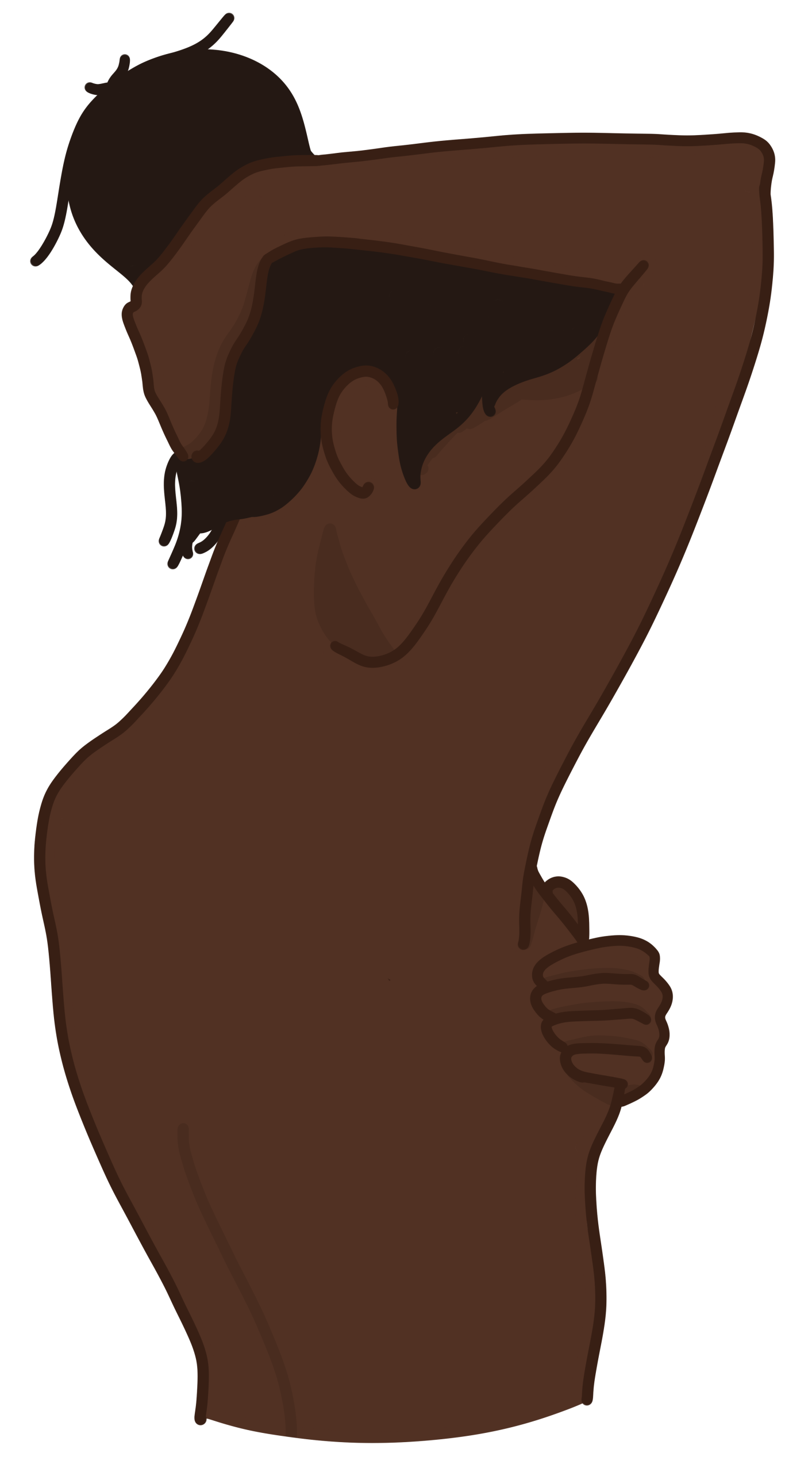
If you do choose to check your chest lying in bed or in the shower, make sure you are still examining them fully in the mirror too. It’s really important to have a good look at the underside of your breasts too – one story that has always stuck with us is that of Susan Hunter-Dabson who only noticed the puckering to the bottom of her breast as she was drying her hair in the mirror with her arms raised. She was diagnosed with invasive cancer in both breasts - this spot saved her life! (You can read more on this here)
Be mindful that your breasts can change depending on where you are in your menstrual cycle. You may find it beneficial to stick to the same phase of your cycle to check your chest, especially when you’re getting used to how your breasts look and feel.
Breast tissue can be naturally lumpy, so checking regularly means you learn to know what is normal for you and your breasts. Having a good baseline is key to spotting changes early, and it might take you a while to get used to.

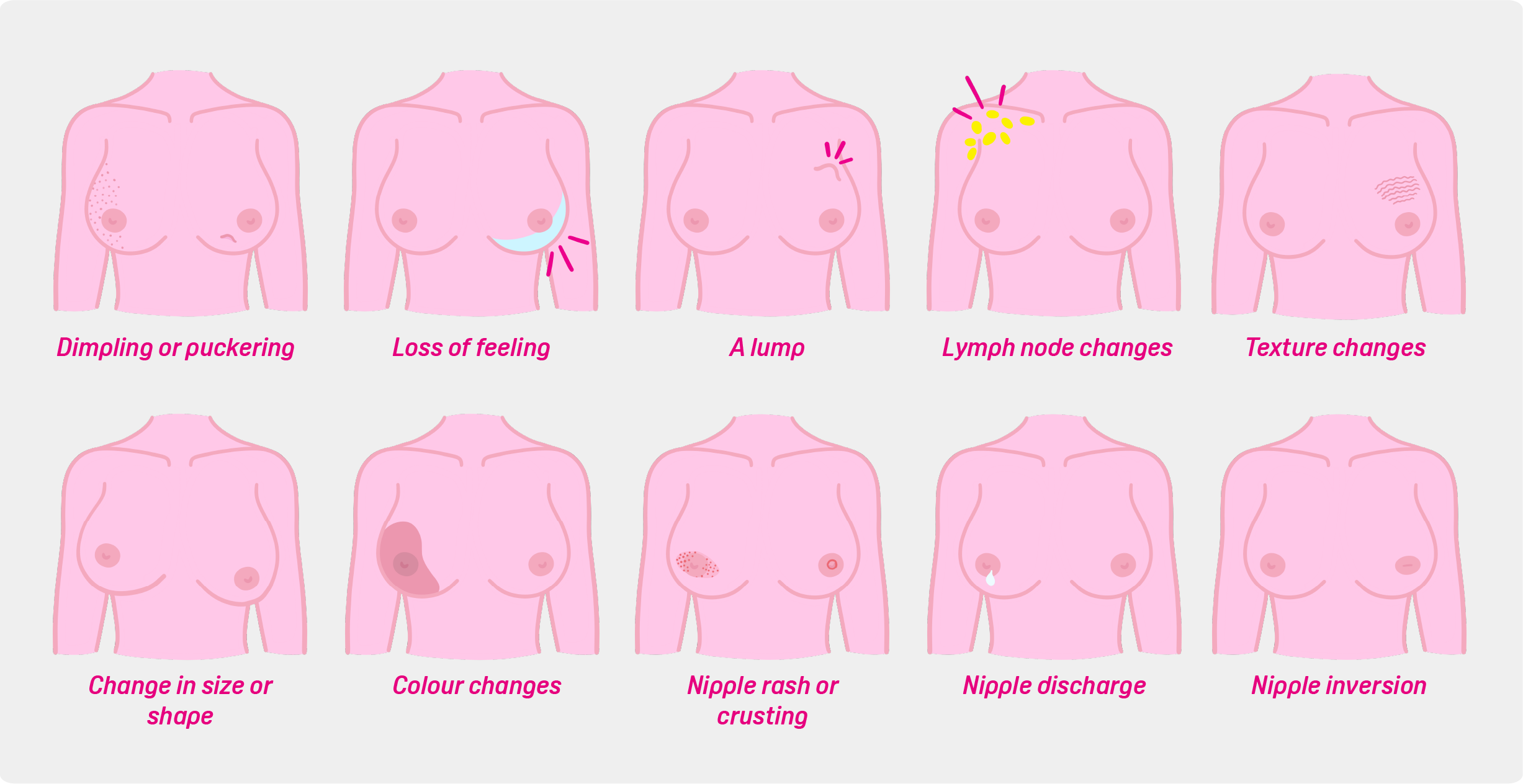
Symptoms of breast cancer
How to check your chest...

👀 Look
Look at your breasts in the mirror in good lighting, making sure to lift your arms so you can see the underneath of your breast.
Look for changes to:

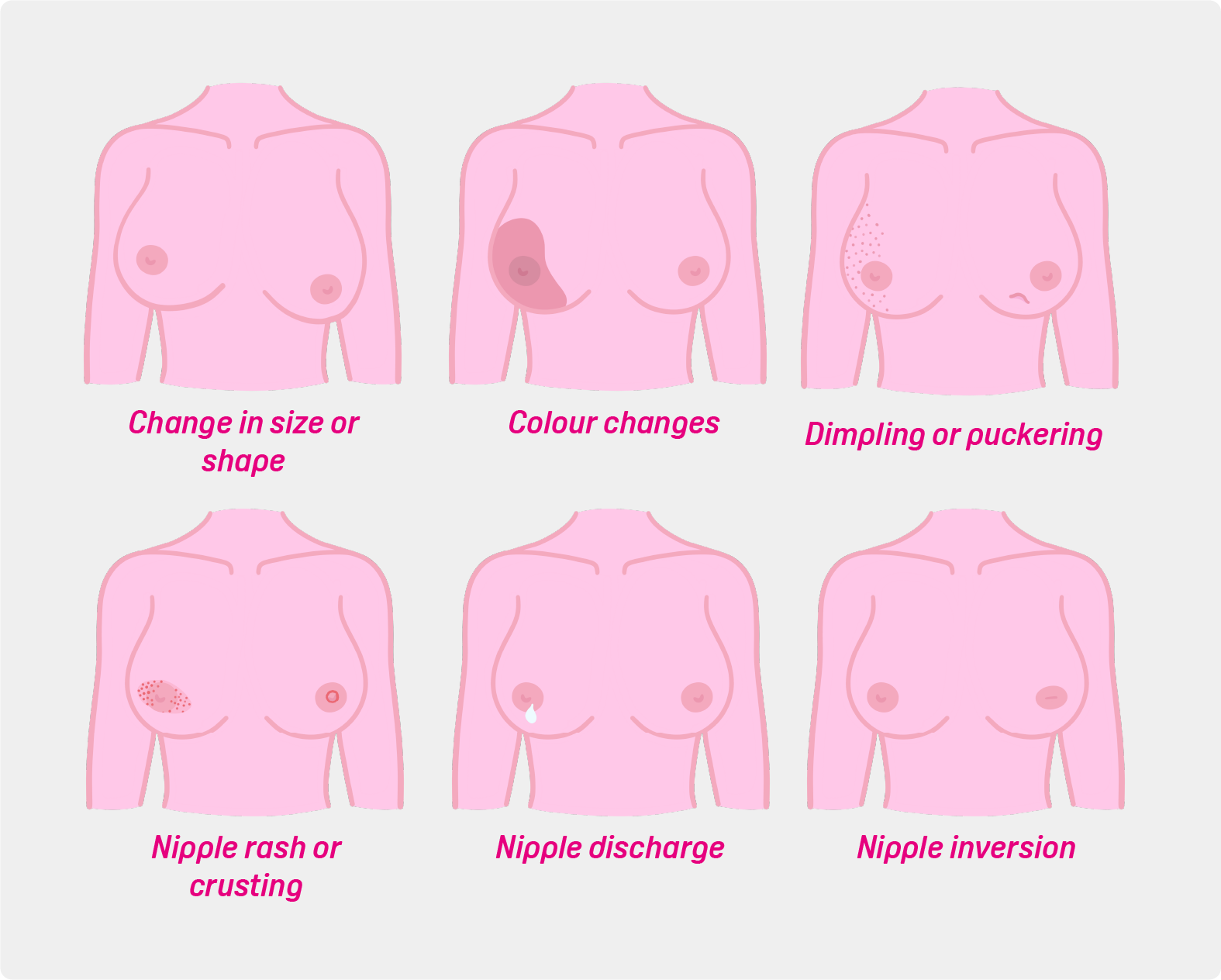
Breast size and shape
It is normal for a lot of people to have one breast bigger than the other, and it isn’t a cause for concern unless the change has happened suddenly.
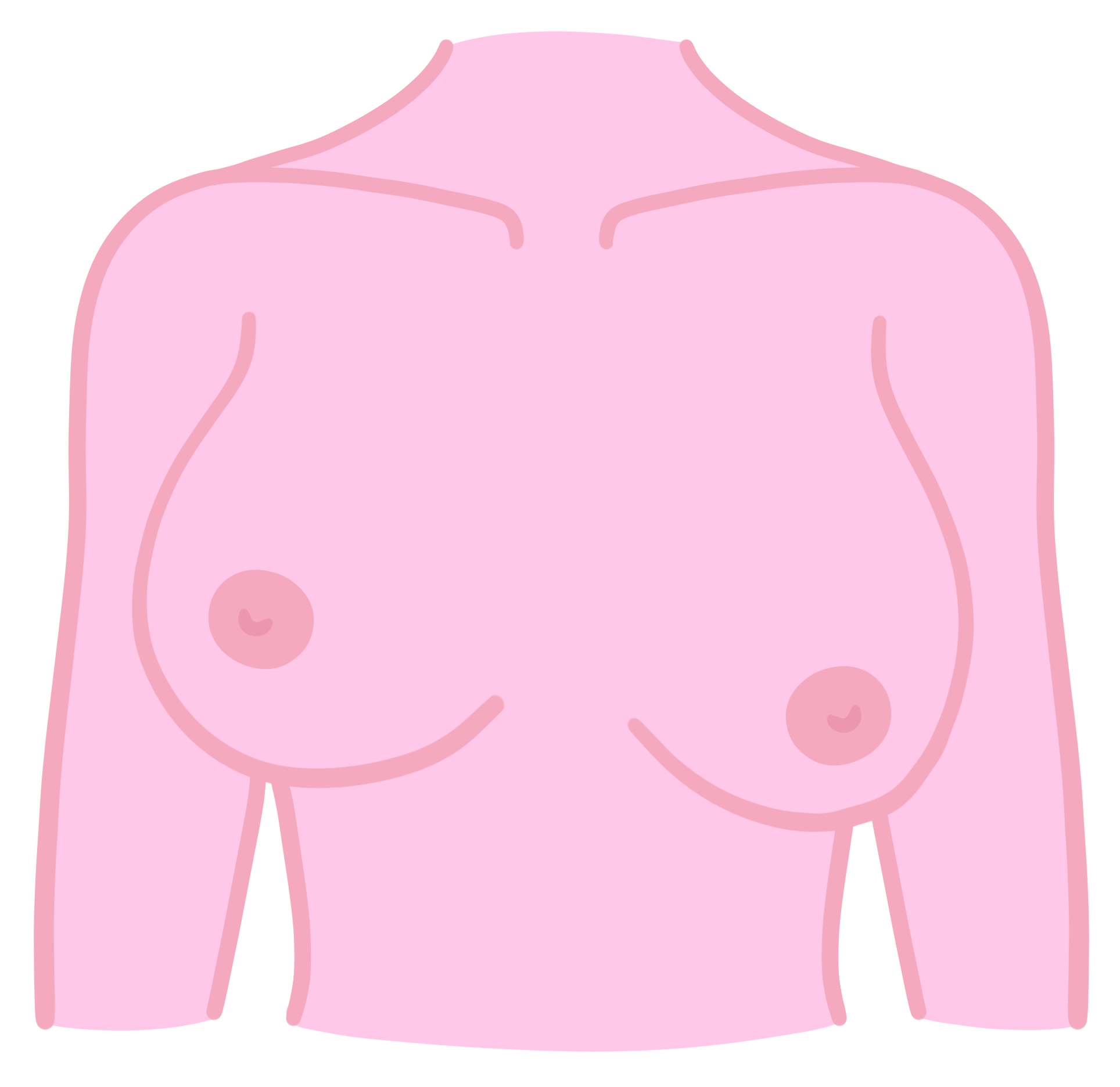

Skin Colour
Darkening, reddening, or any other colour changes to the skin
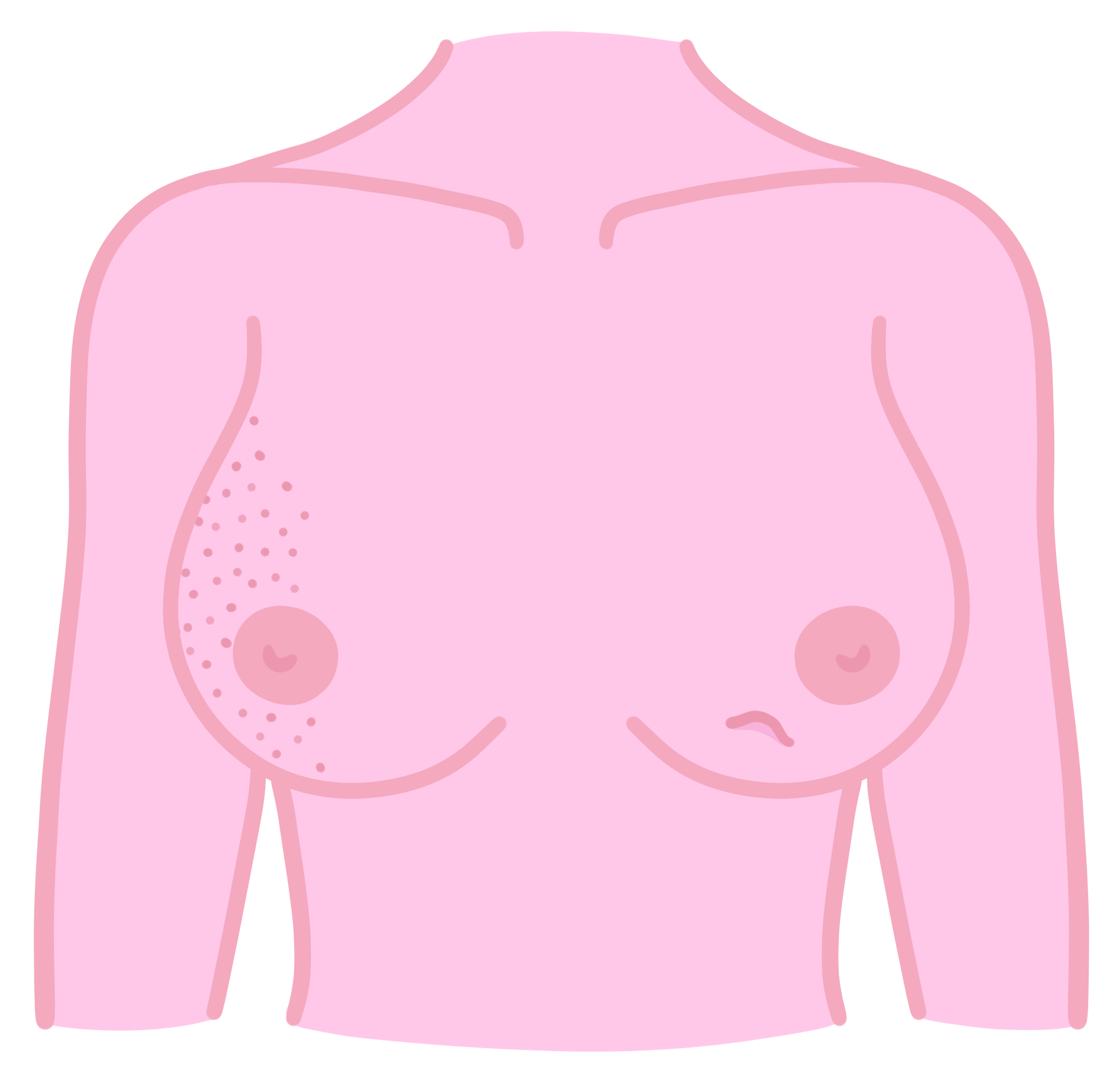
Dimpling & Puckering
Look out for dimpling or puckering of the skin. Dimpling can look a lot like the texture of orange peel – rougher than usual with lots of small dimples. Puckering is when it looks as if part of the skin is being pulled inward into the breast.
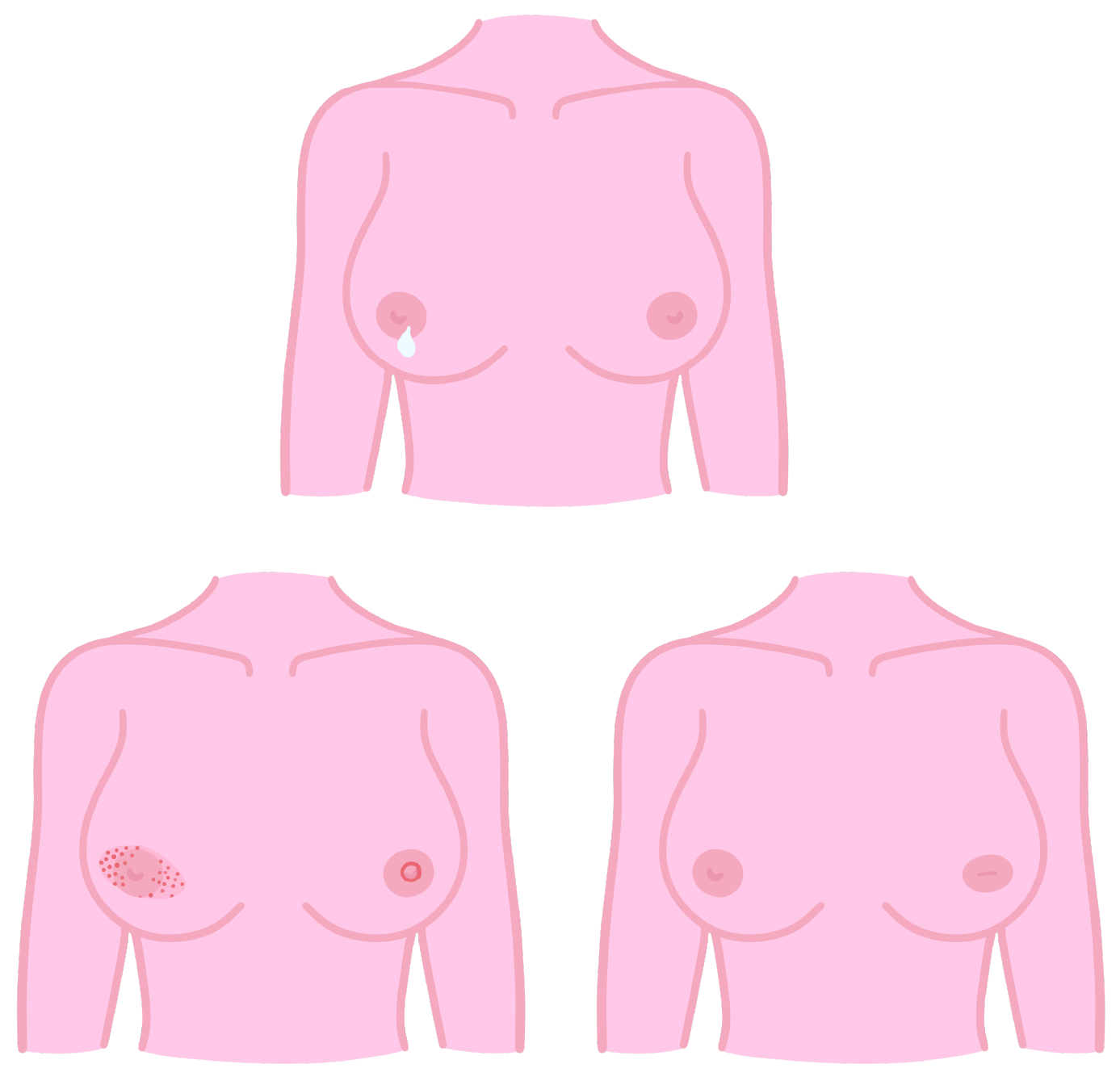
Nipple Changes
Is there any rash, crusting, or discharge?
Has the nipple changed in appearance, retracted inwards or changed direction?
✋ Feel
Lie or stand with your left hand behind your head. Use your right hand to check your left breast, then swap sides and repeat.
It is important to not only feel your breasts, but around your collarbone and armpits too. There are lots of lymph nodes around your armpit and collarbone – swelling of these nodes is something you want to get checked out, so it’s really important not to forget this bit!

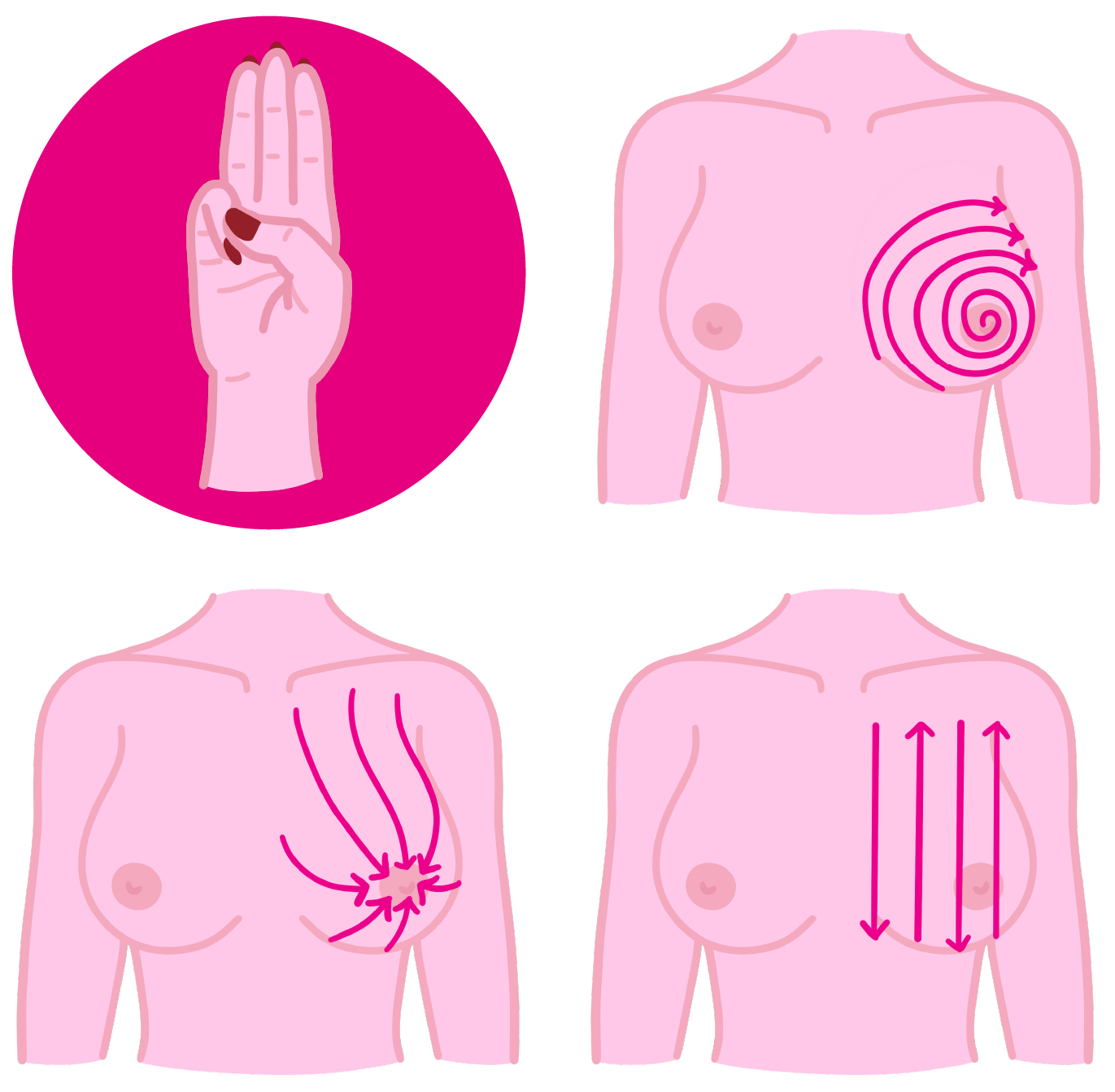
Be systematic – follow a pattern, making sure you don’t chop and change halfway through; this will help you ensure nothing is missed. We recommend working in these motions, making sure you go right up to the armpits and collarbones.
Try all of them at first and see what works best for you - it’s great to use more than one technique to be super thorough.
Using the pads of your three middle fingers, gently but firmly feel your breast for any lumps, bumps, or irregularities. Gently squeeze around your nipple, making sure to feel behind it.
You want to look out for the following:
A Lump
If you discover a lump in your breast, have this checked by a GP immediately. Breast lumps aren’t always cancer – in fact they are often cysts or other harmless lesions – but it’s of the utmost importance this is ruled out properly.
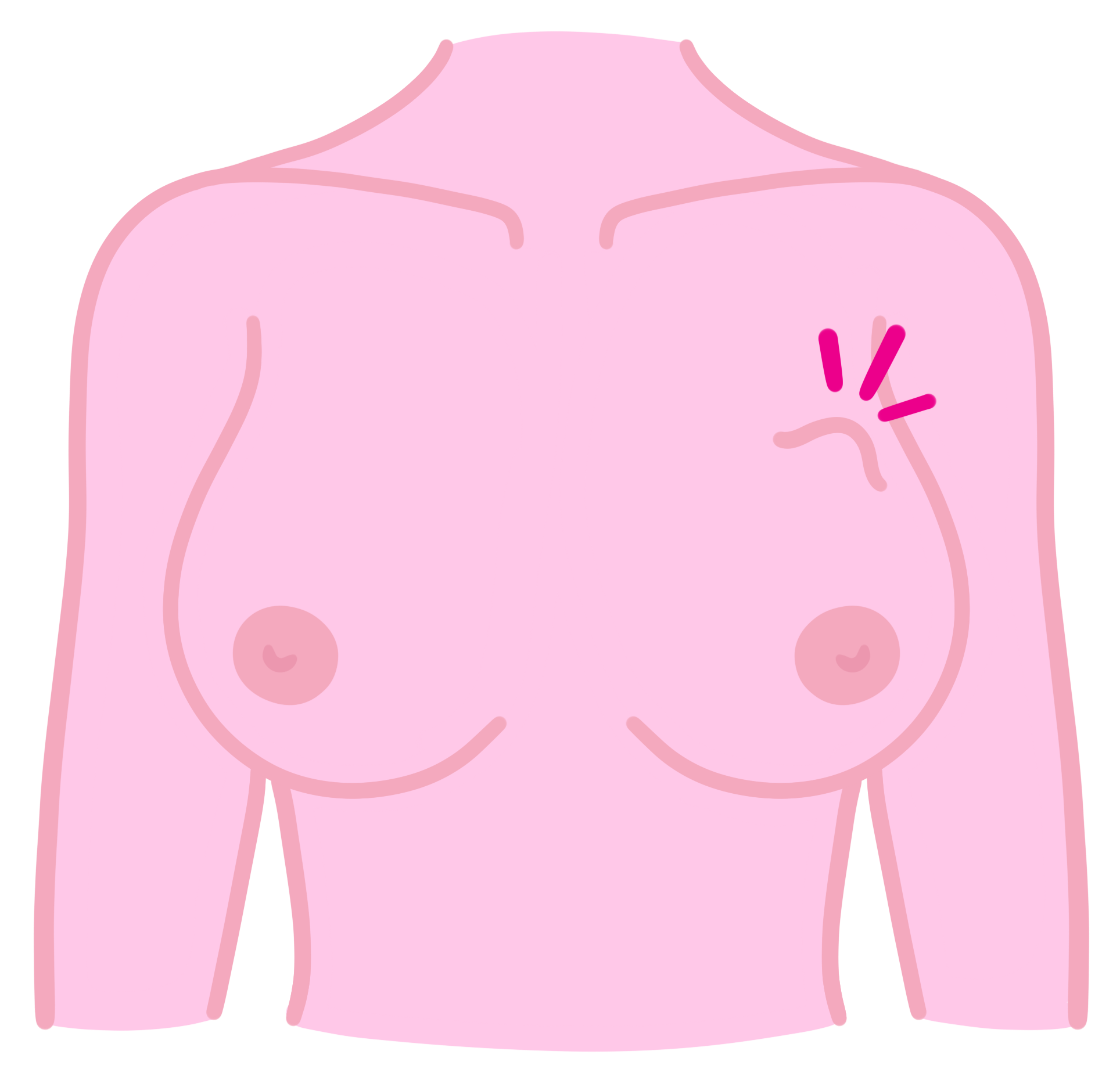
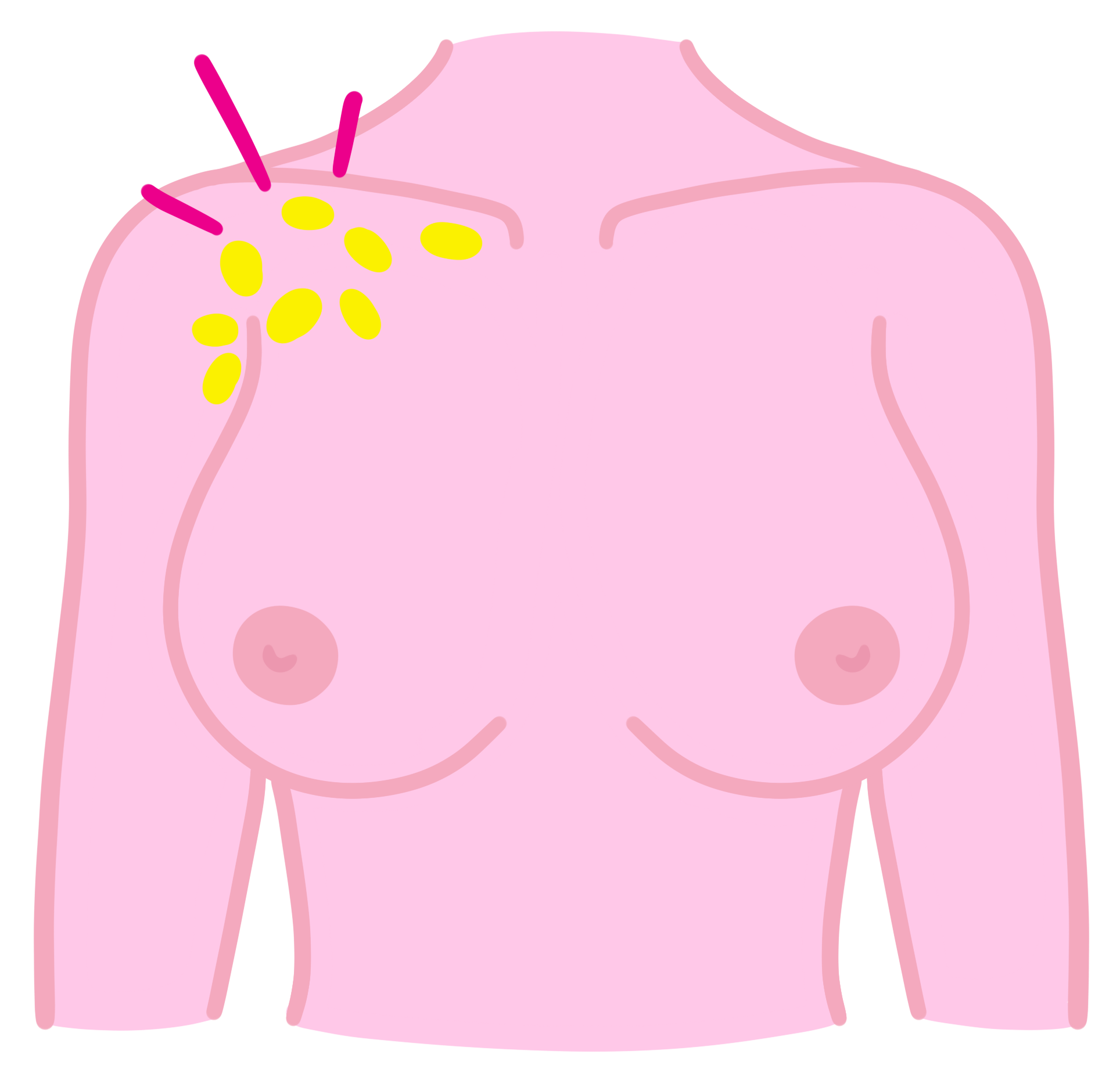
Lymph Nodes
There are 20-40 lymph nodes per breast – though this includes the armpit (axillary) and collarbone (supraclavicular) regions. Lymph nodes play a crucial role in the spread of cancer, so make sure not to miss these areas out.
Dimpling & Puckering
Feel for any thickening of the skin, dimpling and puckering. If you notice any change in the appearance or feel of the skin on your breasts, it is always worth getting checked out by a professional.


Loss of Feeling
Have you lost the ability to feel certain parts of the breast?
Does the skin feel numb?

What to do if you notice something

Contact your GP or primary care provider - they will likely assess you in clinic and you may be referred to your local breast unit for further assessment. This is standard practice to make sure cancers are caught early, so don’t worry if you are referred.
What about breast pain?

Breast pain that comes and goes isn’t usually associated with breast cancer, but if you have a persistent pain in your breast or armpit, you should still visit your GP.
There is a rare form of breast cancer called Inflammatory Breast Cancer (IBC) which can be associated with persistent breast pain – it’s estimated that less than 5% of UK breast cancer cases are IBC7.
In summary...
References
4. Parmeshwar, N., Song, S., Alcon, A. and Kim, E. A. (2022) ‘The incidence of breast cancer after gender-affirming mastectomy in transmen’, Annals of Plastic Surgery, 88(4 Suppl 4), pp. S332–S336.
5. de Blok, C.J.M., Wiepjes, C.M., Nota, N.M., van Engelen, K., Adank, M.A., Dreijerink, K.M.A., Barbé, E., Konings, I.R.H.M. and den Heijer, M. (2019) ‘Breast cancer risk in transgender people receiving hormone treatment: nationwide cohort study in the Netherlands’, BMJ, 365: l1652.


