What's in a boob?


More than half of the UK population has them, but how much do we actually understand about our breasts?
Throwing it back to science classes in school, I remember learning about pretty much every other biological system in my body. We covered the cardiovascular system, the lungs, reproductive organs, digestion – but not breasts. Bizarre, right?
I’d wager that most people – women included – probably aren’t entirely sure what makes up a breast. I myself didn’t know until I joined the II. team years ago – even after studying a degree in medical biology. We think it’s high time we try and bridge this knowledge gap.
So, without further ado, let’s break down bazungas. Debunk double Ds.
Map the melons… OK we’ll stop now.
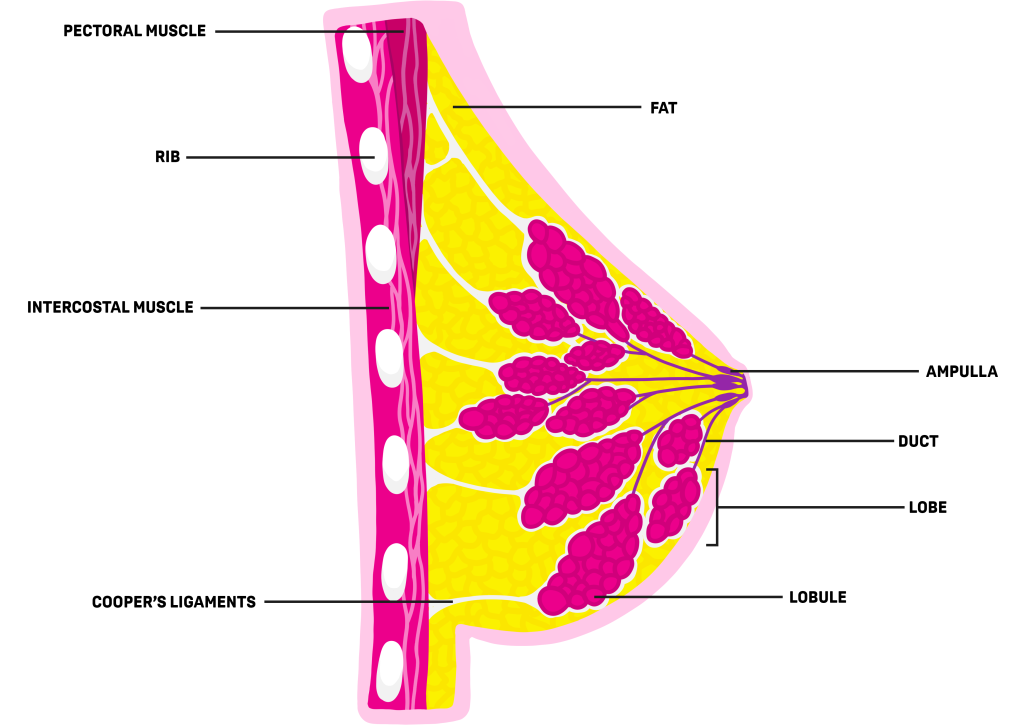
There are 3 main types of breast tissue:
2. Connective tissue
3. Glandular tissue
Fat
The amount of fat can vary hugely from person to person. A study found that breasts can vary from 2% - 78% fat, with 48% being the average1. As we age, our breasts tend to get fattier as the amount of glandular tissue decreases, most notably during menopause2.
It mainly plays a structural and protective role in the breast, acting as a cushion to the glandular tissue and providing structural support.
Connective tissue...
Did you know breasts contain ligaments? They even have their own name – Cooper’s Ligaments – named after Sir Astley Paston Cooper, who first described them in his 1840 book, On the Anatomy of the Breast. These ligaments hold the dense, glandular tissue of the breast in place.
Glandular tissue
And finally, the dairy factory. The glandular tissue includes the parts of the breast that both produce milk and transport it to the nipple. Glandular tissue consists of:
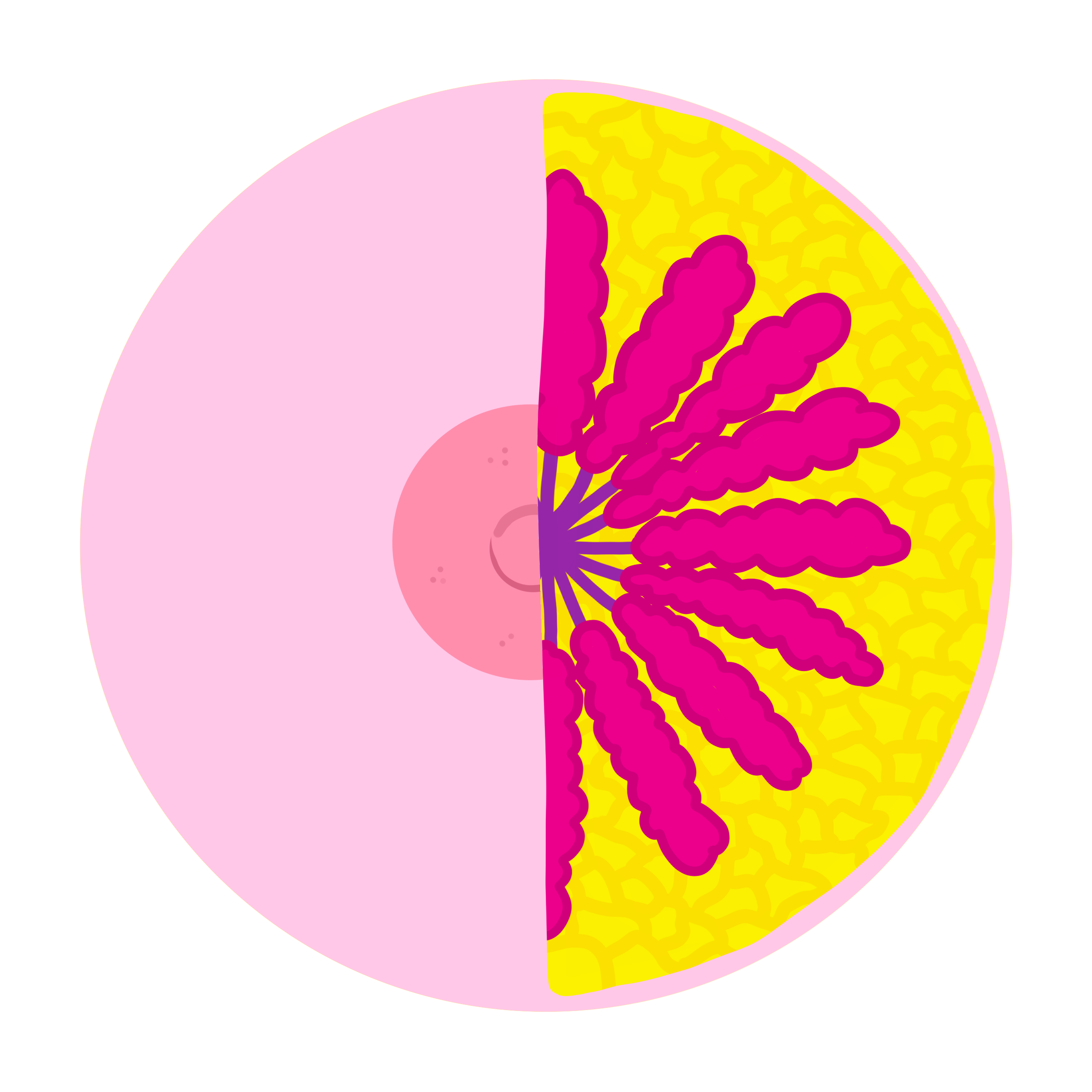
Lobes – Approximately 15-20 per breast, each lobe is arranged like the petals of a flower if you were to look at a breast from the front.
Lobules – Inside the lobes are smaller structures called lobules which are filled with clusters of milk-producing glands.
Ducts – As the name implies, the ducts transport milk from the lobes to the nipple. Closer to the nipple, the ducts contain small reservoirs called ampulla where milk can be temporarily stored.

What else is in a boob?

Additionally in the breast you will find lymph nodes – a network of substations keeping the neighbourhood clean. They play a role in your immune defence, acting like filters for bacteria, viruses and abnormal cells that drain away from the breast in lymph fluid. These nodes are clinically important because we know that the lymphatic system can play an important role in cancer metastases. There are around 20-40 in the breast and axillary region (around your armpit), usually around 6mm in size3.
The glandular tissues in the breast are where most breast cancers start - it is incredibly rare for breast cancer to start in the fat or connective tissue. This is likely due to the fact that the cells in these tissues are hormonally sensitive – they require interaction from hormones to stimulate activity. Because these cells are dividing and changing under the influence of hormones, they are at a greater risk of mutation, which can lead to cancer.
When you check your chest for the first time, you may be surprised by how lumpy and bumpy your breast tissue can feel. That’s why it’s really important that you get into a regular habit of checking your breasts so that you know your normal - it will be easier to tell if something changes. If you notice any changes to your breasts or feel something of concern, you should always get it checked by a medical professional (ie. Your GP).
We hope you found this insightful, and if you happen to be the owner of a pair yourself, hopefully now you feel like you know them a little better!
Thanks for reading.
References
- Lejour, M. (1997) ‘Evaluation of fat in breast tissue removed by vertical mammaplasty’, Plastic and Reconstructive Surgery, 99(2), pp. 386–393. doi: 10.1097/00006534-199702000-00012.
- Kim, E.Y., Chang, Y., Ahn, J., Yun, J.-S., Park, Y.L., Park, C.H., Shin, H. & Ryu, S. (2020) ‘Mammographic breast density, its changes, and breast cancer risk in premenopausal and postmenopausal women’, Cancer, 126(22), pp. 4687–4696. doi:10.1002/cncr.33138
- Marino, M.A., Avendano, D., Zapata, P., Riedl, C.C. & Pinker, K. (2020) ‘Lymph node imaging in patients with primary breast cancer: concurrent diagnostic tools’, The Oncologist, 25(2), pp. e231–e242. doi:10.1634/theoncologist.2019-0427
- Menon, G., Alkabban, F. M. & Ferguson, T. (2025) ‘Breast Cancer’, StatPearls [Internet]. Treasure Island (FL): StatPearls Publishing. Available at: https://www.ncbi.nlm.nih.gov/books/NBK482286/


